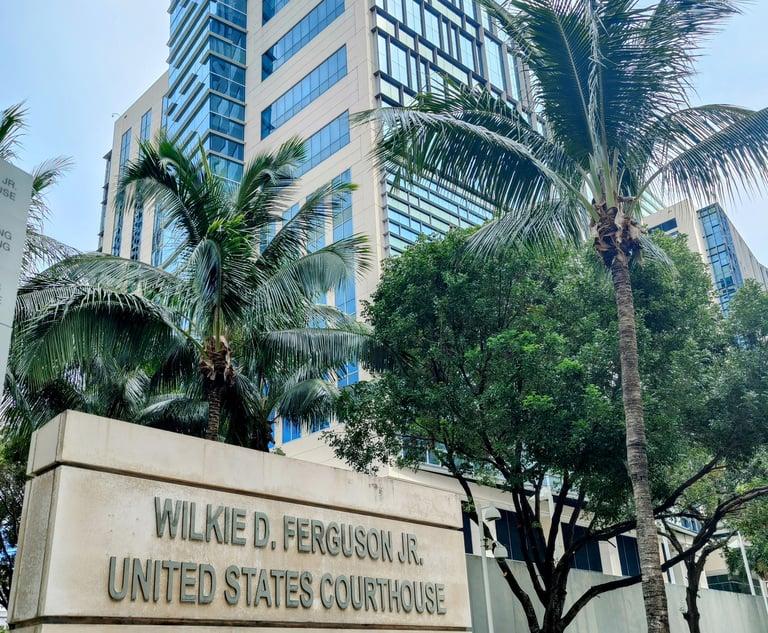
Florida remains an important state to watch for businesses tracking ADA website accessibility developments in 2026. Recent federal filings show that digital accessibility claims are still being brought against companies whose websites are alleged to create barriers for people with disabilities, including users who rely on screen readers.

One recent example is Gil et al. v. Planet Fitness Franchising LLC, filed July 13, 2026, in the U.S. District Court for the Southern District of Florida. The case was brought under Title III of the Americans with Disabilities Act. The complaint contains allegations, not a final finding of liability, but the docket is a useful reminder that website accessibility continues to be litigated in Florida.
The bigger takeaway is not that every inaccessible website will be sued, or that every technical WCAG issue automatically establishes an ADA violation. It is that digital accessibility is still a practical business issue involving usability, technical quality, and legal risk management.
Florida ADA website litigation is active, even as the numbers shift
Third-party litigation trackers show a mixed picture in 2026. EcomBack’s mid-year review reported 333 Florida website accessibility lawsuits during the first half of 2026, down from 487 during the comparable 2025 period in its dataset. That placed Florida fourth among the states counted in the report.
A decline from the prior year can sound reassuring, but it should not be confused with inactivity. Florida still represented a meaningful share of the cases tracked nationally, and recent federal dockets continue to show new ADA accessibility claims being filed.
Another national tracker from UsableNet reported 401 digital accessibility lawsuits in July 2026. It also reported that 113 defendants were using a third-party accessibility-related control or widget when they were sued. That does not establish that widgets cause lawsuits, and it does not prove those tools had no value. It does show why businesses should avoid treating a single overlay or automated control as a substitute for broader accessibility testing and remediation.
An interesting Florida lesson: accessibility is a workflow problem, not a one-time plugin
The most useful way to read the recent news is to look beyond individual complaints. Many accessibility barriers arise from ordinary website workflows: navigation, product search, forms, account creation, checkout, reservations, store locators, PDFs, and other interactive tasks.
A website can appear visually polished and still create serious obstacles for someone navigating by keyboard or using assistive technology. Common examples include controls without meaningful accessible names, focus that is difficult to track, form errors that are not programmatically associated with fields, images that lack useful text alternatives, and dialogs that do not manage keyboard focus correctly.
This is why a practical accessibility testing strategy combines automated scanning with manual evaluation. Automated tools are useful for identifying certain repeatable code-level issues, but they cannot reliably determine whether every task can actually be completed by a person using a keyboard or screen reader.
Do not confuse Florida private-business cases with the new Title II deadlines
There is another 2026 development that can easily be misunderstood. The U.S. Department of Justice has specific web and mobile accessibility requirements for state and local governments under ADA Title II. In April 2026, the DOJ extended the compliance dates: public entities with populations of 50,000 or more now have until April 26, 2027, while public entities with populations under 50,000 and special district governments have until April 26, 2028.
Those dates matter to Florida counties, cities, agencies, and other covered public entities. They are not a universal federal deadline for every private business website in Florida. Private businesses are generally discussed under a different part of the ADA, including Title III questions about access to the goods and services of places of public accommodation.
For background on that distinction, see our guide to ADA Title III and digital accessibility.
What Florida businesses should review now
A sensible response to current ADA accessibility news is not panic. It is to test the website’s most important customer journeys and fix barriers that prevent independent use.
- Keyboard accessibility: Confirm that menus, dialogs, forms, product controls, and other interactive elements can be reached and operated without a mouse.
- Visible focus: Make sure keyboard users can tell which element currently has focus.
- Screen-reader behavior: Test page structure, headings, form labels, buttons, links, status messages, and dynamic updates with assistive technology.
- Images and icons: Provide meaningful text alternatives when visual content communicates information or performs a function.
- Forms and errors: Ensure instructions and validation messages are understandable and programmatically connected to the relevant fields.
- Checkout, booking, and account flows: Test complete tasks rather than isolated pages.
- PDFs and downloadable documents: Include important documents in the accessibility review when they are part of the customer experience.
Businesses should also re-test after redesigns, platform migrations, theme changes, new plugins, marketing campaigns, and major content updates. Accessibility can regress when a site changes, even after earlier remediation.
What a recent lawsuit does—and does not—tell you
A filed complaint tells you what a plaintiff alleges. It is not the same as a court ruling that a company violated the ADA. That distinction matters when reading headlines about website accessibility cases.
At the same time, repeated allegations across digital accessibility cases can help teams identify areas worth testing. The goal should be to remove real barriers for users rather than to chase individual complaint language or rely on a checklist that is disconnected from how the website actually works.
Our earlier overview of ADA lawsuit trends and case studies provides additional context on how accessibility litigation fits into a broader digital accessibility program.
A practical next step for Florida organizations
If your organization has not recently tested its website with both automated and manual methods, start with the pages and tasks that matter most to customers. An effective review should identify potential accessibility issues, map them to relevant WCAG success criteria where appropriate, and provide remediation guidance that developers can act on.
ADA Access Group provides technical website accessibility auditing and remediation support. We do not provide legal advice, and an accessibility audit by itself does not establish or guarantee ADA compliance.
Request a Website Accessibility Review to identify barriers affecting keyboard and assistive-technology users and prioritize practical remediation work.
Sources and reporting notes
This update is based on recent public docket information and current accessibility reporting available as of August 26, 2026. The Planet Fitness case information comes from the federal docket summary published by Justia. Florida mid-year filing figures cited above are attributed to EcomBack’s 2026 mid-year lawsuit report, while July national figures are attributed to UsableNet’s lawsuit tracker. The Title II compliance dates are based on current U.S. Department of Justice guidance at ADA.gov.