
A new website accessibility lawsuit filed against jewelry retailer Ana Luisa Retail LLC offers another timely reminder that digital accessibility remains an active issue for e-commerce businesses in 2026.
Benavides Moran v. Ana Luisa Retail LLC, case number 1:26-cv-07125, was filed in the U.S. District Court for the Southern District of New York on August 21, 2026. Public case summaries report that the plaintiff alleges blind and low-vision users cannot fully use the retailer’s online store because the site does not work adequately with screen-reading software and other assistive technologies.
Those are allegations in a newly filed complaint, not a court finding that Ana Luisa violated the ADA. The case is still an early-stage dispute, and businesses should avoid treating a complaint as a final legal conclusion.
What the Ana Luisa accessibility lawsuit alleges
According to public summaries of the filing, the plaintiff claims that accessibility barriers interfere with the ability of people who are blind or have low vision to browse and purchase products through the Ana Luisa website. The complaint seeks relief under the Americans with Disabilities Act and proposes a class involving users with visual disabilities who allegedly encountered similar barriers.
The core issue is familiar in digital accessibility litigation: whether an online shopping experience provides people using assistive technology with meaningful access to the same products, information, and transactions available to other customers.
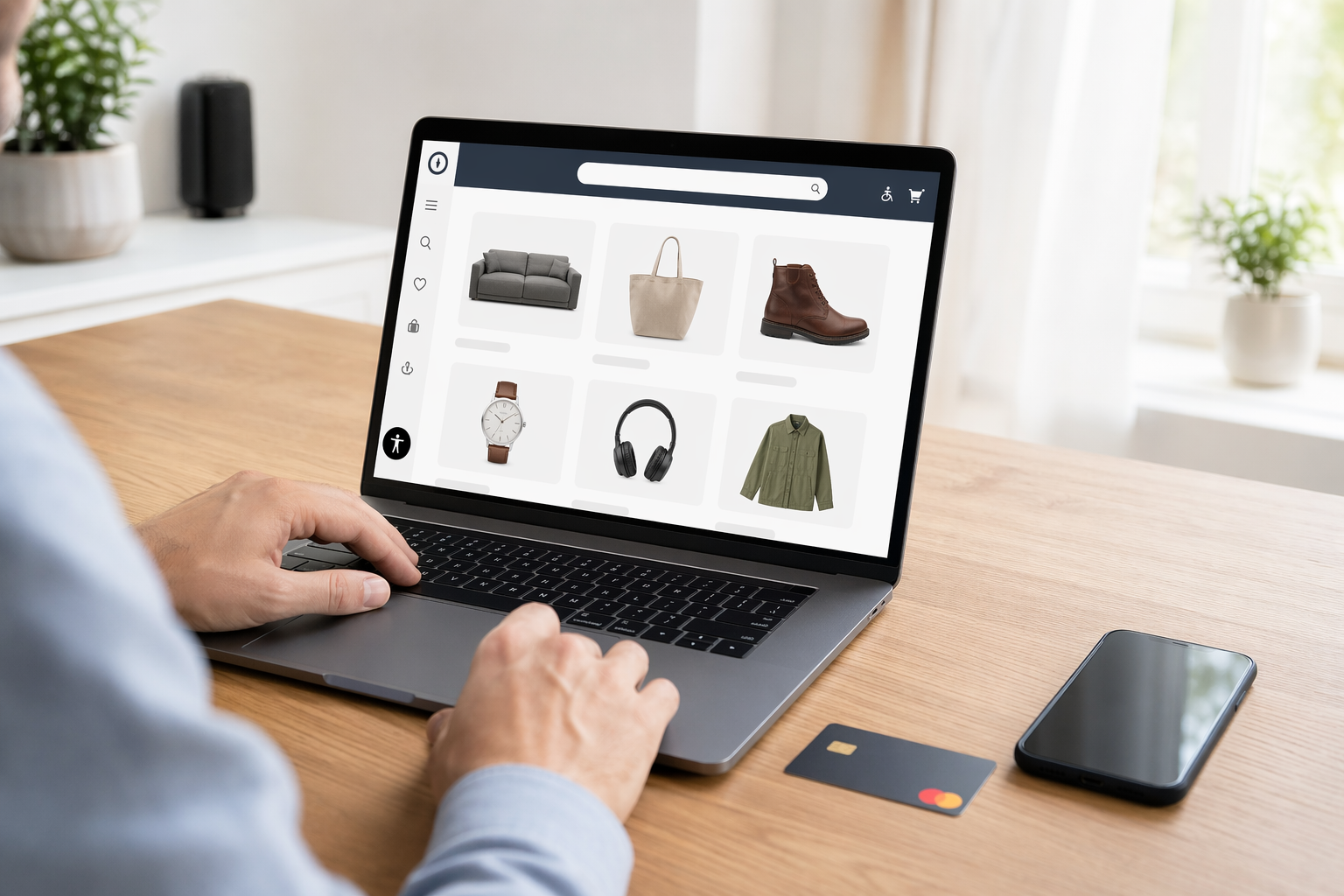
For retailers, that means accessibility is not limited to a homepage or a handful of static pages. The practical user journey can include navigation, search, product filtering, product details, account creation, cart controls, promotional dialogs, checkout, validation messages, and post-purchase information.
Why this filing matters beyond one retailer
The significance of the Ana Luisa case is not that it establishes a new legal rule. It does not. The more useful takeaway is that e-commerce accessibility claims continue to reach recognizable consumer brands and remain concentrated around real shopping tasks.
Current litigation trackers also show a steady volume of new cases. UsableNet reported 401 new ADA web accessibility lawsuits in July 2026, including defendants that had faced prior digital accessibility litigation and businesses using third-party accessibility controls. Those numbers come from one private litigation tracker and should not be treated as an official government count, but they illustrate the continuing level of activity.
For businesses following broader patterns, our overview of recent ADA lawsuit trends and case studies provides additional context.
The accessibility lesson: test the complete shopping journey
A retailer can have a visually polished storefront and still create substantial barriers for customers using a keyboard or screen reader. Accessibility testing should therefore focus on whether people can complete important tasks, not simply whether an automated scanner returns a favorable score.
Product discovery
Customers should be able to identify navigation landmarks, understand link and button purposes, move through menus, use search, and operate filters without relying on a mouse. Controls need meaningful accessible names, and focus should move in a logical order.
Product information
Product images need useful text alternatives when the image communicates information. Variant selectors, size or color controls, price changes, availability notices, and expandable product details should expose their names, states, and relationships to assistive technology.
Cart and checkout
The checkout flow deserves special attention because small accessibility failures can block a purchase entirely. Form fields should have programmatically associated labels, errors should be identified clearly, keyboard focus should remain visible, and updates such as cart totals or validation messages should be conveyed in a way assistive technology can detect.
Overlays, dialogs, and third-party tools
Retail sites often rely on chat tools, loyalty widgets, marketing popups, payment services, review systems, and other third-party components. These can become accessibility barriers even when the core theme is relatively accessible. A retailer should test the integrated experience rather than assume each vendor component works correctly for every user.
Automated scanning is useful, but it is not the finish line
Automated tools can detect many code-level issues quickly, including some missing text alternatives, labeling problems, color contrast failures, and structural errors. They are valuable for ongoing development and quality assurance.
However, automated scanning cannot reliably determine whether every interactive workflow is understandable and operable for a real person using assistive technology. It also cannot establish complete WCAG or ADA compliance on its own.
That is why a mature accessibility process combines automation with keyboard testing, manual accessibility testing, and screen-reader evaluation of important user journeys. Our guide to automated tools versus manual accessibility testing explains the difference in more detail.
What e-commerce teams should do now
The most practical response to accessibility litigation trends is not panic and not a one-time scan. It is a repeatable testing and remediation process built around real customer tasks.
- Map critical journeys. Identify the paths customers use to search, compare, configure, add to cart, check out, create accounts, and contact support.
- Test keyboard accessibility. Confirm that all controls can be reached and operated without a mouse and that visible focus is easy to follow.
- Test with screen readers. Review headings, landmarks, forms, dialogs, dynamic updates, product options, and checkout interactions with assistive technology.
- Review third-party components. Include embedded tools and vendor widgets in testing because they are part of the customer experience.
- Remediate confirmed barriers. Fix the underlying code, content, design, or integration issues and document what changed.
- Retest after changes. Accessibility can regress when themes, apps, campaigns, or checkout components are updated.
What the lawsuit does not prove
It is important to keep the legal framing accurate. A complaint contains a plaintiff’s allegations. It does not, by itself, prove that a website violated the ADA, that every alleged accessibility issue is technically correct, or that a particular WCAG success criterion is legally required in every private-business context.
For background on the legal framework, see our explainer on ADA Title III and digital accessibility. Businesses facing an actual complaint or demand letter should consult qualified legal counsel for legal advice.
The bigger takeaway for retailers
The Ana Luisa filing is a current example of a broader operational problem: if a customer cannot independently browse products or complete a purchase with assistive technology, the accessibility barrier is also a broken customer journey.
Strong accessibility programs treat these issues like other quality defects. Automation can identify some problems at scale, people can verify how the experience actually works, developers can remediate confirmed barriers, and teams can retest after changes.
Automation finds issues. People verify accessibility. Developers fix confirmed barriers.
If you want to understand where your website may be creating barriers, request a Website Accessibility Review from ADA Access Group. An accessibility review can help prioritize technical findings and important user journeys without treating an automated scan as a complete compliance determination.
Sources
- Federal case tracking for Benavides Moran v. Ana Luisa Retail LLC, S.D.N.Y., case 1:26-cv-07125, filed August 21, 2026.
- Public federal-court case summary describing the plaintiff’s screen-reader and assistive-technology allegations.
- UsableNet ADA Accessibility Lawsuit Tracker, July 2026 monthly filing data.
This article discusses technical accessibility and publicly reported litigation for informational purposes. ADA Access Group provides accessibility services, not legal advice.